
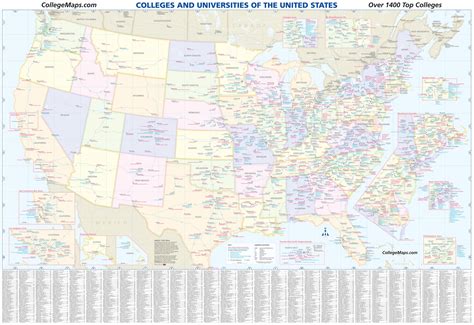
The United States is home to over 4,000 colleges and universities, offering a diverse range of academic programs, research opportunities, and campus experiences. For students navigating this complex landscape, a comprehensive map guide can be an invaluable resource. This article provides an in-depth exploration of US universities and colleges, including their distribution across different regions, characteristics, and features that cater to various student needs.
Regional Distribution of US Universities and Colleges
The US is typically divided into four main regions: Northeast, South, Midwest, and West. Each region has its unique characteristics, advantages, and concentrations of educational institutions.
- Northeast: This region includes states such as Massachusetts, New York, Pennsylvania, and New Jersey. It’s characterized by a high density of both public and private institutions, with a mix of liberal arts colleges and large research universities.
- South: Encompassing states like Texas, Florida, and North Carolina, the South is home to a diverse range of institutions, from large public universities to smaller private colleges. Historically Black Colleges and Universities (HBCUs) are also significantly represented in this region.
- Midwest: States such as Illinois, Michigan, and Ohio make up the Midwest, known for its public universities and a strong presence of land-grant colleges. These institutions often have a strong focus on agriculture, engineering, and other practical fields.
- West: The Western United States, including California, Washington, and Oregon, features a mix of public and private institutions. This region is notable for its innovative and tech-focused universities, such as Stanford and the University of California, Berkeley.
Types of US Universities and Colleges
US universities and colleges can be categorized based on their funding sources, academic focuses, and student demographics.
| Institution Type | Description | Examples |
|---|---|---|
| Public Universities | Funded by state governments, these universities often have larger student bodies and offer a wide range of undergraduate and graduate programs. | University of California, University of Michigan |
| Private Colleges | Privately funded, these institutions can be non-profit or for-profit. They often have smaller class sizes and may offer more specialized programs. | Harvard University, Stanford University |
| Liberal Arts Colleges | Focused on providing a broad-based education in the arts, humanities, social sciences, and natural sciences. | Amherst College, Swarthmore College |
| Community Colleges | Two-year institutions that offer associate degrees and certificates. They often serve as a stepping stone to four-year colleges. | Various community colleges across the US |
Key Considerations for Students
When choosing a university or college, students should consider several factors to ensure the best fit for their academic, personal, and professional goals.
- Location: Proximity to home, urban vs. rural settings, and regional characteristics can significantly impact a student’s experience.
- Size: Larger universities may offer more resources and diversity, while smaller colleges can provide a more personalized education.
- Academic Programs: The availability of majors, minors, and special programs can be a deciding factor. Some institutions are renowned for specific fields, such as engineering or business.
- Campus Culture: Extracurricular activities, support services, and campus facilities contribute to the overall student experience.
- Cost and Financial Aid: Tuition fees, living expenses, and the availability of scholarships and financial aid packages are critical considerations.
Navigating the Map: Tools and Resources
To help students navigate the complex landscape of US universities and colleges, various tools and resources are available.
- College Search Websites: Online platforms that allow students to filter institutions based on their preferences and criteria.
- Campus Visits: Firsthand experiences of campuses can provide invaluable insights into an institution's culture and community.
- College Fairs and Guidance Counselors: These resources can offer personalized advice and information about different colleges.
Future Trends in US Higher Education
The landscape of US higher education is continually evolving, driven by technological advancements, demographic changes, and shifting economic conditions.
- Online and Hybrid Learning: The rise of digital technologies has made it possible for institutions to offer flexible learning options that cater to diverse student needs.
- Accessibility and Affordability: Efforts to make higher education more accessible and affordable are ongoing, with initiatives aimed at reducing costs and improving outcomes for underrepresented groups.
- Career Readiness: There’s a growing emphasis on preparing students for the workforce through experiential learning, internships, and vocational training.
Conclusion
The US higher education system is characterized by its diversity, complexity, and constant evolution. By understanding the regional distribution of universities and colleges, the various types of institutions available, and the key factors to consider when choosing a college, students can make informed decisions that align with their goals and aspirations. As the landscape continues to shift, staying informed about emerging trends and leveraging available resources will be crucial for navigating the path to success.
What are the main factors to consider when choosing a US university or college?
+When selecting a US university or college, students should consider factors such as location, size, academic programs offered, campus culture, and the total cost of attendance, including available financial aid.
How do public and private universities differ in the US?
+Public universities are funded by state governments and tend to have larger student bodies and a broader range of programs. Private universities are funded through private sources and can offer more specialized programs and smaller class sizes.
What role do community colleges play in US higher education?
+Community colleges provide two-year associate degree programs and certificates, serving as a cost-effective pathway for students to begin their higher education journey or acquire specific skills. They often have articulation agreements with four-year colleges, facilitating transfer.
How is technology changing the US higher education landscape?
+Technology is driving the growth of online and hybrid learning models, enhancing accessibility and flexibility for students. It also supports innovative teaching methods and improves educational outcomes through data analytics and personalized learning experiences.
